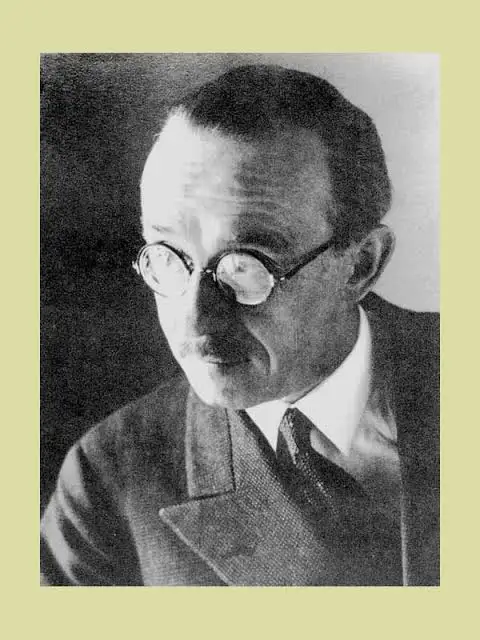
1881–1935 · Germany
レーベレヒト・ミッゲ / Leberecht Migge
German landscape architect and regional planner; theorist of self-sufficiency
A landscape architect who believed a revolution of gardens could change society.
Born in 1881 in Danzig (now Gdańsk), Leberecht Migge was a landscape architect, regional planner and polemical writer. Against the food shortages of the First World War, he developed a vision of the industrial city with a garden for everyone.
In his 1919 work 'Jedermann Selbstversorger!' (Everyone Self-Sufficient), the so-called 'Green Manifesto,' Migge argued that creating as many gardens as possible — above all intensive vegetable plots — could solve society's social and economic problems. Influenced by the anarchist Kropotkin, he became deeply involved in the postwar Siedlung (housing-estate) movement and designed 'productive Siedlungen' with gardens built in.
For Migge, gardens were not decoration but a means of relative freedom from the domination of capitalism. His idea of designing housing and food production as one is a direct precursor of today's urban farms and edible landscapes.
“The garden is the site of the revolution that changes society.” (the spirit of the Green Manifesto)
Key contributions
- Systematised the idea of self-sufficient gardens in 'Everyone Self-Sufficient' (1919)
- Designed and built 'productive Siedlungen' with food gardens integrated
- Laid an intellectual foundation linking housing, food and social reform